
Buying a Holiday Home in Yorkshire: The Complete Guide

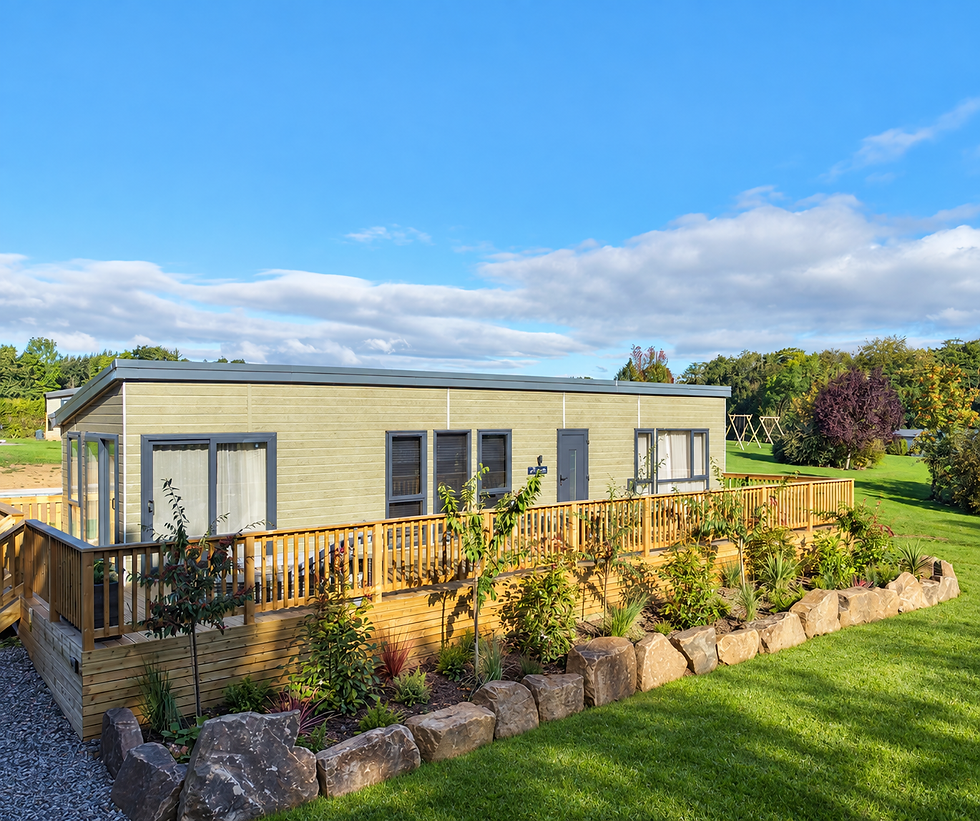
Buying a holiday home in Yorkshire gives you your own place to escape to whenever you want a weekend in the countryside, a longer summer break or simply a change of scenery.
But if you've never owned a holiday home before, there is plenty to consider.
Should you choose a static caravan or a lodge? Which part of Yorkshire is right for you? How much are annual site fees? How long can you keep your holiday home on the park? And what questions should you ask before signing anything?
If you're thinking about buying a holiday home in Yorkshire, this complete guide takes you through the process step by step, from choosing your location and park to understanding costs, ownership agreements and finding the right holiday home.
Is buying a holiday home in Yorkshire worth it?
Buying a holiday home in Yorkshire can be worth it if you want somewhere you can return to regularly and you're comfortable with the purchase price and ongoing costs of ownership.
The biggest benefit is convenience.
Instead of searching for accommodation every time you want a weekend away, you have your own holiday home waiting for you.
For many owners, that means more spontaneous breaks. You can finish work on Friday, pack a few essentials and head to your holiday home without worrying about hotel availability or finding somewhere suitable during busy periods.
Yorkshire is particularly attractive because there is so much variety within the region.
You could choose a holiday home close to the Yorkshire Dales, somewhere near a market town such as Richmond, Leyburn or Northallerton, a woodland setting, or a park with facilities such as golf, restaurants and wellness areas.
The key is to buy for the lifestyle and enjoyment rather than treating a holiday home as a traditional property investment.
Step 1: Decide how you want to use your holiday home
Before looking at individual holiday homes, think about what ownership looks like for you.
Will you mainly use it for weekends?
Are you hoping to spend several weeks there during the summer?
Will it primarily be for you and your partner, or do you expect children and grandchildren to visit regularly?
Do you want somewhere quiet where you can read, walk and relax, or would you prefer a park with plenty of facilities?
These questions matter because they influence almost every other decision you'll make.
A couple looking for peaceful weekend escapes may choose a completely different park and holiday home from a family wanting plenty of space for children and grandchildren.
Think about your ideal weekend at your holiday home, rather than simply which lodge or static caravan looks nicest online.
Step 2: Choose the right part of Yorkshire
Yorkshire is a big place, so location should be one of your first considerations.
North Yorkshire is particularly popular for holiday home ownership because it combines beautiful countryside with historic market towns, villages and access to the Yorkshire Dales.
Areas around Richmond, Leyburn, Bedale and Northallerton can provide a good balance between rural surroundings and having shops, restaurants and attractions nearby.
When comparing locations, think about the journey from home too.
A beautiful holiday park isn't much use if the drive is long enough to discourage you from visiting for spontaneous weekends.
Ask yourself:
How long will it take us to get there?
Will we realistically make that journey regularly?
What is there to do within 20–30 minutes of the park?
Are there good pubs and restaurants nearby?
Where are the nearest shops?
Are there walking routes and attractions we'll actually use?
Is the surrounding area somewhere we'll still enjoy visiting in five or ten years?
It's worth spending time in the local area before committing to a park.
Step 3: Find the right Yorkshire holiday park
Once you've narrowed down your preferred area, start comparing parks.
This is arguably more important than choosing the holiday home itself.
You can redecorate a lodge. You can replace furniture. You might even change your holiday home in the future.
You can't move the park.
Our guide to the best holiday parks in Yorkshire is a useful starting point for comparing your options.
Some of the parks worth considering include:
Akebar Park
Situated close to the Yorkshire Dales, Akebar Park combines countryside surroundings with facilities including an 18-hole golf course and The Friars Head pub and restaurant.
That can make it particularly appealing if you want the peace of a countryside holiday home while still having things to do without leaving the park.
You can view current static caravans for sale at Akebar Park.
Kiplin Country Park
Kiplin Country Park is located between Richmond and Northallerton and is particularly suited to buyers looking for a quieter, more luxurious countryside retreat.
Its focus on wellness and outdoor living includes facilities such as a sauna, cold plunge, woodland walks and e-bikes.
There is a selection of holiday lodges available, including more luxurious models for buyers looking for additional space and higher specifications.
Flowery Dell
Close to Richmond, Flowery Dell offers something a little different thanks to its woodland setting.
It can be particularly appealing if the reason you're buying a holiday home is to get away from busy everyday life and spend more time surrounded by nature.
Explore Flowery Dell to learn more about the park.
Thorpe Farm Holiday Park
Thorpe Farm Holiday Park is well placed for exploring the countryside around the North Yorkshire and County Durham border, including Barnard Castle and Teesdale.
It can also be useful for buyers wanting to compare different budgets because the park offers both new and pre-owned holiday homes.
See the current static caravans and lodges for sale at Thorpe Farm.
You can compare more options in our guide to the best holiday parks in Yorkshire.
Step 4: Decide between a static caravan and a lodge
One of the next decisions is whether to buy a static caravan or holiday lodge.
There's no universal answer because both can make excellent holiday homes.
Static caravans
Static caravans are generally the more accessible entry point into holiday home ownership.
Modern models can be extremely comfortable, with open-plan kitchens and living spaces, central heating, double glazing and stylish interiors.
They can be ideal if you want a holiday home for regular weekends and breaks without needing the additional space of a lodge.
Holiday lodges
Holiday lodges are typically larger and can offer a more residential-style feel.
Depending on the model, you may get larger bedrooms, en-suite bathrooms, bigger kitchens, more storage and more generous living areas.
Higher-specification lodges can include features such as freestanding furniture, integrated appliances, walk-in wardrobes and large sliding or bi-fold doors opening onto decking.
If you plan to spend longer periods at your holiday home or regularly have friends and family staying, the additional space can be worthwhile.
Step 5: Set a realistic budget
Your budget shouldn't only cover the purchase price.
Before viewing holiday homes, establish what you can comfortably afford both initially and each year thereafter.
The advertised purchase price may include different things depending on the park and holiday home.
Ask whether it includes:
Siting and connection
Decking
Furniture
Appliances
Parking
Landscaping
Initial site fees
Any other extras shown with the holiday home
Don't assume that everything you see in photographs is included.
A cheaper holiday home may also require additional spending on decking or other features, whereas a more expensive pre-owned model might already include them.
Compare the complete package rather than the headline price alone.
Step 6: Understand annual site fees
One of the most important ongoing costs is the annual site fee, sometimes called a pitch fee.
This is the amount you pay the park for keeping your holiday home on its plot and will normally contribute towards the operation and maintenance of the park.
Site fees vary between parks and sometimes between different plots or developments on the same park.
Before buying, ask:
What are the current annual site fees?
When are they payable?
What do they include?
How are future increases calculated?
Are there any additional annual charges?
Don't base your decision solely on the current figure. You need to be comfortable with the longer-term cost of ownership too.
Step 7: Budget for other running costs
Site fees aren't your only ongoing expense.
Depending on the park and holiday home, you may also need to budget for:
Gas and electricity
Insurance
Wi-Fi
Maintenance
Servicing
Decking maintenance
Winter preparation
Replacement appliances
Other park charges where applicable
Ask the park for a clear explanation of all likely charges.
If possible, work out an estimated annual ownership budget before buying. It is much better to understand these costs at the beginning than discover them later.
Step 8: Choose between new and pre-owned
You don't necessarily have to buy a brand-new holiday home.
Both new and pre-owned models have advantages.
Buying new
A new holiday home gives you the latest specification, no previous owners and usually the benefit of manufacturer warranties, subject to the individual manufacturer's terms.
Depending on the park, you may also have more choice over the model and plot.
Buying pre-owned
A pre-owned holiday home can provide excellent value.
It may allow you to get a larger or higher-specification model within your budget, while features such as decking may already be installed.
The plot can also be an attraction in itself. A pre-owned holiday home might occupy a mature, established position that you particularly like.
When considering pre-owned, pay close attention to the age and condition of the holiday home and understand how its age relates to the park's ownership terms.
Step 9: Choose your plot carefully
It's easy to become so focused on the holiday home that you overlook the plot.
But your plot can have a major impact on how much you enjoy ownership.
When viewing plots, consider:
Views
Privacy
Sunlight
Proximity to neighbouring holiday homes
Parking
Distance from park facilities
Road noise
Foot traffic
Trees and surrounding landscaping
Outdoor space
Decking possibilities
Visit at different times of day if possible.
A plot that feels wonderfully sunny at midday might be shaded in the evening when you're most likely to sit outside.
Similarly, being close to facilities may be convenient, but you might prefer a quieter position further away.
Step 10: Understand the ownership agreement
Before buying any holiday home, make sure you understand the park's ownership terms.
Don't rely solely on what you've been told verbally. Ask to see the relevant documentation.
Important areas to understand include:
How long the park is open each year
How long you can keep your holiday home on the park
Site fees and other charges
Rules around selling your holiday home
Whether subletting is allowed
Rules for family and guests
Pet policies
Maintenance requirements
Park rules
Any restrictions on how the holiday home can be used
If there's anything you don't understand, ask before committing.
Can you live permanently in a holiday home?
A holiday home on a holiday park is not normally intended to be your permanent main residence.
The exact rules depend on the park, its site licence and your ownership agreement.
Some parks have long seasons and allow owners to use their holiday homes for much of the year, but that doesn't automatically mean you can use one as your permanent residential address.
If your intention is to live permanently on a park, you need to look specifically at residential park homes and appropriately licensed residential parks rather than assuming a holiday park will allow this.
Step 11: Think about the park season
Different parks have different opening seasons.
This is particularly important if you picture yourself using your holiday home during the winter.
Ask exactly when the park opens and closes and whether there are any periods when owners can't use their holiday homes.
Think about when you're realistically going to visit.
A long season might be extremely important to a retired couple who wants to spend significant amounts of time at their holiday home, but less important to a family who expects to use it mainly during spring and summer.
Step 12: Consider family, friends and pets
Think about who will actually use the holiday home.
If children or grandchildren will regularly stay, a second bathroom and additional bedroom could be much more useful than you initially realise.
If you have a dog, check the park's pet policy and look at the surrounding walking routes.
You should also ask about the rules regarding family members and guests using your holiday home when you're not there.
Families may find our guide to the best family holiday parks in North Yorkshire useful when comparing parks.
Can you rent out your holiday home?
This depends entirely on the park.
Some parks permit subletting, potentially subject to their own conditions or letting arrangements. Others don't allow it at all.
If being able to rent out your holiday home is important to your buying decision, establish the rules before purchasing.
Don't assume that future rental income will cover your ownership costs.
If your primary motivation is investment return rather than personal enjoyment, holiday home ownership may not be the right purchase for you.
Do holiday homes depreciate?
Static caravans and holiday lodges generally depreciate over time and should primarily be considered lifestyle purchases rather than traditional property investments.
Unlike purchasing a conventional house, you will not normally own the land underneath a holiday home situated on a holiday park.
Future resale value can be influenced by factors including the age and condition of the holiday home, its model, the park, the plot, market demand and the park's resale terms.
That's why we recommend thinking about the value you'll get from actually using and enjoying your holiday homerather than relying on future capital growth.
Step 13: Visit several parks before deciding
Online research is extremely useful, but there comes a point when you need to visit.
Try not to buy the first holiday home you view without seeing how other parks compare.
Visit two or three parks and spend time walking around each one.
Pay attention to things that don't necessarily appear in photographs:
How spacious does the park feel?
Is it peaceful?
How well maintained are the grounds?
What's the atmosphere like?
How friendly are the team?
Do you like the surrounding area?
Can you picture yourself coming back regularly?
Sometimes you'll know fairly quickly whether a park feels right.
Questions to ask before buying a holiday home in Yorkshire
Before committing to a purchase, make sure you can answer the following:
How much are the annual site fees?
Ask for the current amount, what it includes and how increases are handled.
What other annual costs should I budget for?
Include utilities, insurance, maintenance and any other park charges.
How long is the park open?
Check the exact ownership season.
How long can I keep my holiday home on the park?
Understand the park's current age and ownership policies.
Can family and friends use it?
Ask about guest policies.
Can I sublet it?
Never assume letting is permitted.
What is included in the purchase price?
Clarify decking, furniture, appliances, siting and any other extras.
What happens when I want to sell?
Understand the resale process and any applicable park terms.
Can I bring pets?
Check both the park policy and any restrictions.
What warranty is included?
For new holiday homes, establish exactly which warranties apply and for how long.
Common mistakes to avoid when buying a holiday home
One of the biggest mistakes is choosing the holiday home before choosing the park.
A beautiful lodge won't make up for a location you don't enjoy visiting.
Another is looking only at the purchase price.
Annual ownership costs matter, and you should be comfortable paying them even during a year when you don't use the holiday home as much as expected.
Other common mistakes include not reading the ownership agreement, assuming you can sublet, failing to ask about the park season and overlooking the importance of the plot.
Most of these can be avoided simply by asking plenty of questions before buying.
What's the process for buying a holiday home?
The exact process varies between parks, but generally you'll:
Decide on your preferred area and budget.
Research suitable Yorkshire holiday parks.
Arrange park visits.
Compare available static caravans and lodges.
Choose your preferred holiday home and plot.
Review the park's ownership terms and costs.
Confirm exactly what's included in the purchase.
Complete the relevant paperwork and payment arrangements.
Arrange your handover.
Get the keys and start enjoying your holiday home.
There's no need to rush.
Take the time to compare your options and make sure you understand the complete cost and terms of ownership before committing.
Buying a holiday home in Yorkshire: is it right for you?
If you love visiting Yorkshire and want somewhere you can return to regularly, owning a holiday home can completely change how you spend your free time.
Instead of planning every break months in advance, Yorkshire becomes somewhere you can escape to whenever your park's season and your schedule allow.
But it's still a significant purchase.
Before buying, make sure you've found:
The right location. The right park. The right holiday home. The right plot. And ownership costs you're comfortable with.
Get those five things right and you're much more likely to enjoy your holiday home for years to come.
Start your search for a holiday home in Yorkshire
If you're thinking about buying a holiday home in Yorkshire, the best place to start is by comparing different parks and seeing what your budget can buy.
At Your Leisure helps buyers explore holiday parks, static caravans and lodges across Yorkshire, with options ranging from peaceful woodland retreats to parks with golf, restaurants and wellness facilities.
Start with our guide to the best holiday parks in Yorkshire, shortlist the parks that fit your lifestyle and then arrange a visit.
Because buying the right holiday home isn't simply about finding the nicest lodge or static caravan.
It's about finding somewhere you'll genuinely look forward to returning to, weekend after weekend and year after year.


Comments